C1702A
02SPECIFICATIONS
- Manufacturer
- Intel
- Category
- Integrated Circuit
- MPN
- C1702A
- Introduced
- 1971
- Storage
- 2 Kbit
- Technology Node
- 10 μm
- Package
- 24-pin Ceramic Dual In-line Package (CDIP)
- Collection
- Intel's First ICs
03SUMMARY
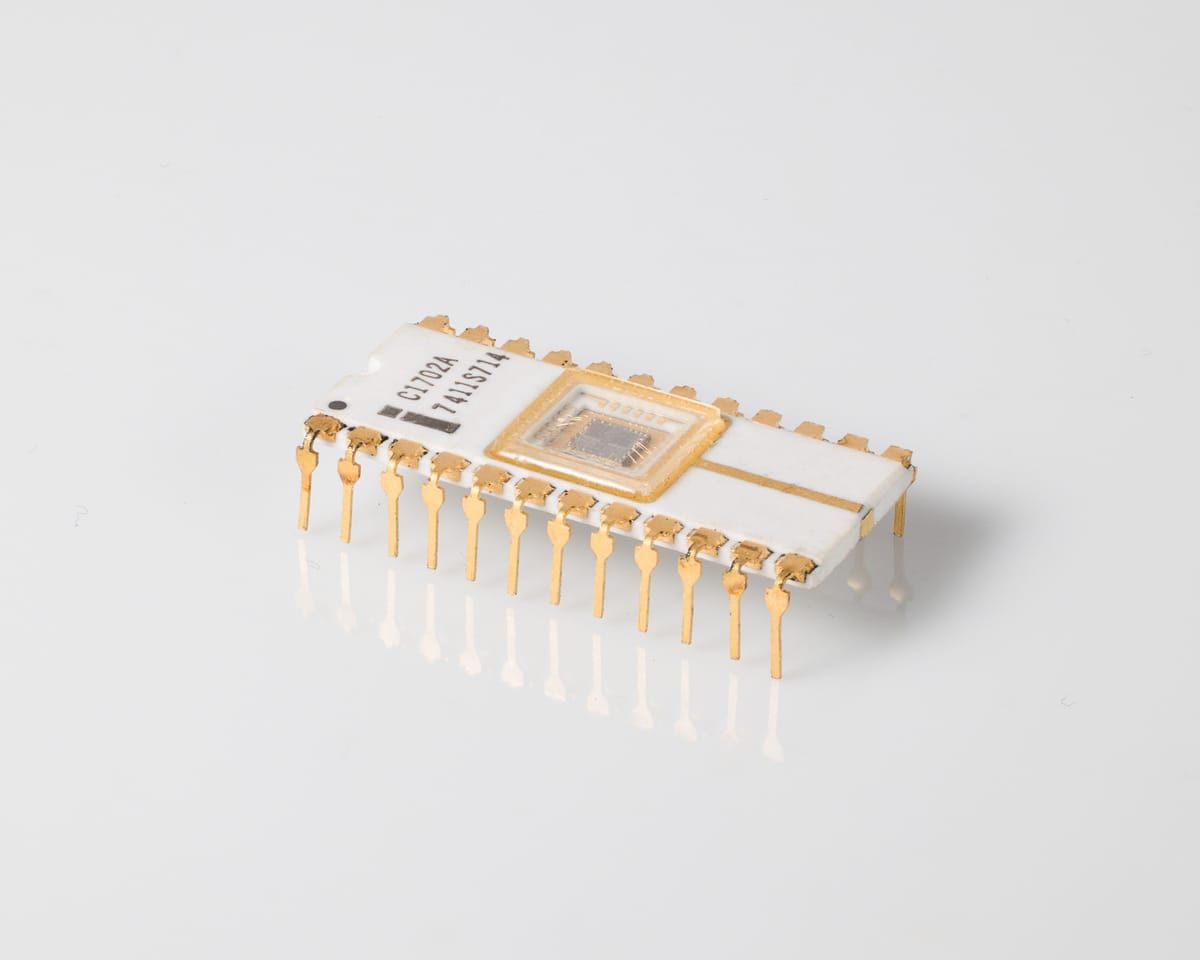
The Intel 1702 (and its later revision, the 1702A, often appearing as C1702A in ceramic packages) was the world's first commercially available Erasable Programmable Read-Only Memory (EPROM) chip. Invented by Dov Frohman at Intel and announced in 1971, the 1702A was a 2048-bit (256 words x 8 bits) non-volatile memory device. It was fabricated using PMOS technology. A distinctive feature of the 1702A, and EPROMs in general, is the transparent fused quartz window on the top of the package. This window allows the silicon chip to be exposed to ultraviolet (UV) light, which erases the stored data, making the chip reprogrammable. This capability was revolutionary for microprocessor development in the early 1970s, as it allowed engineers to prototype and debug firmware without having to order new ROM chips for every code change, significantly accelerating the development cycle. The 1702A required multiple voltage rails for operation and programming. It was crucial for early microcomputers that used Intel's 4004, 8008, and 8080 microprocessors.