Intel's First ICs
Six chips from Intel's first six years: the memories that began to replace magnetic core, and the first processors built on a single chip.
02NARRATIVE
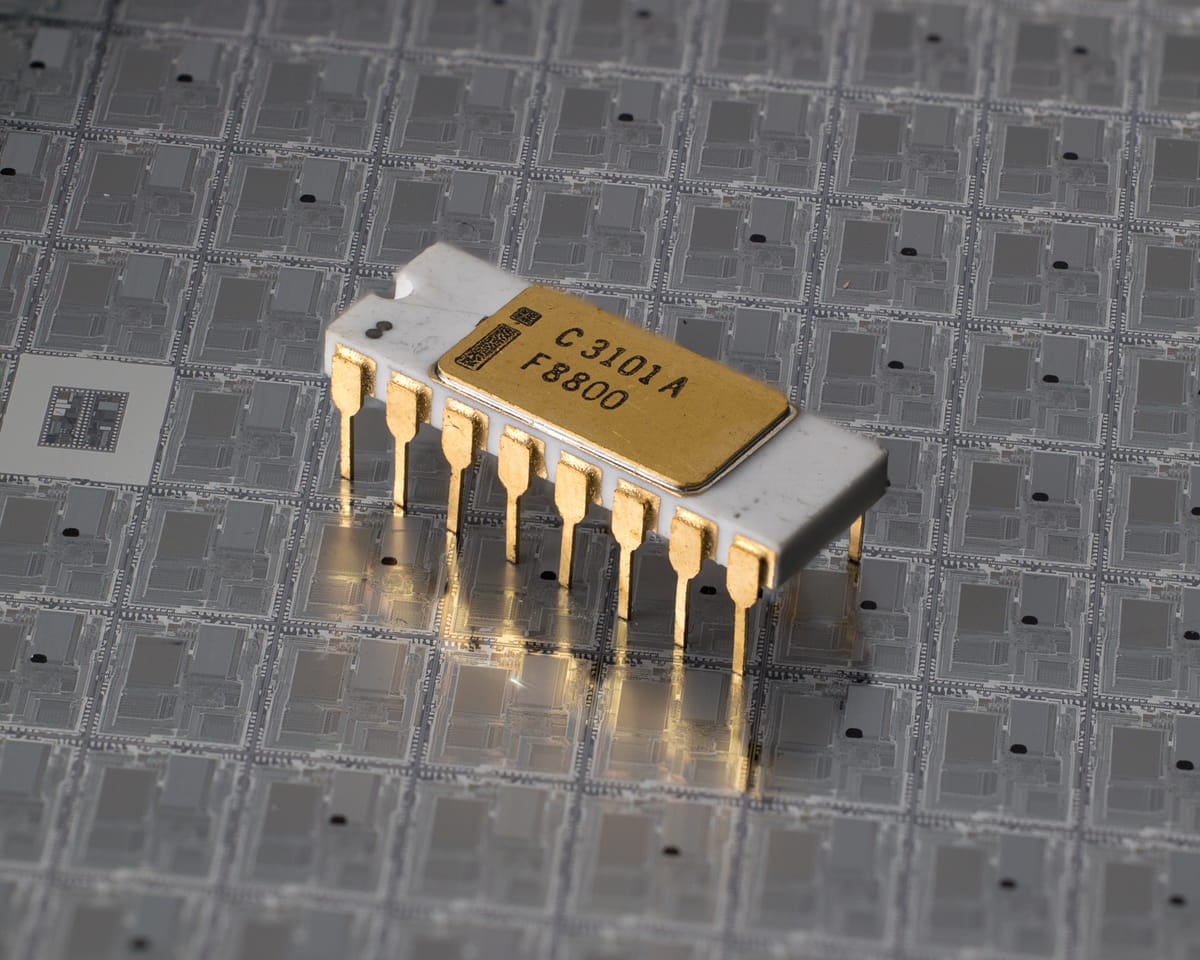
Intel was founded in 1968 to make memory, not processors. Its first product, the 3101 of 1969, was a 64-bit static RAM built in fast Schottky bipolar logic. A year later the 1103 put 1,024 bits of dynamic RAM on one chip, at a price that let semiconductor memory begin to replace the magnetic core from which main memories had been built.
The 1702 of 1971 added a third kind of memory: one that kept its contents without power, yet could be erased under ultraviolet light and written again. That made program code cheap to change, just as code became the point. The same year, a calculator commission from the Japanese firm Busicom became the 4004, a four-bit central processor on a single chip, sold with its own family of support chips.
The 8008 of 1972, commissioned by the terminal maker Computer Terminal Corporation, widened the processor to eight bits, and the 4040 of 1974 refined the four-bit line with interrupts and a larger instruction set. In six years Intel had gone from a memory supplier to a maker of microprocessors, and each chip here marks one step of that turn.
03THE TOUR — IN CURATED ORDER
-
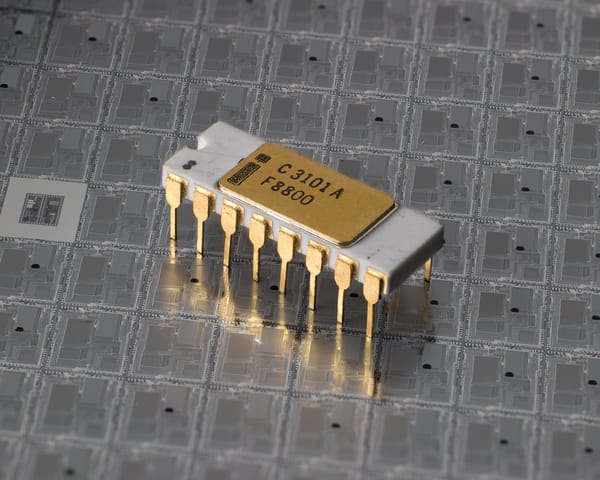
C3101A
Where it starts: Intel's first product, a 64-bit memory fast enough for a computer's scratchpad, made when the company had no processor of its own. OPEN THE RECORD → -
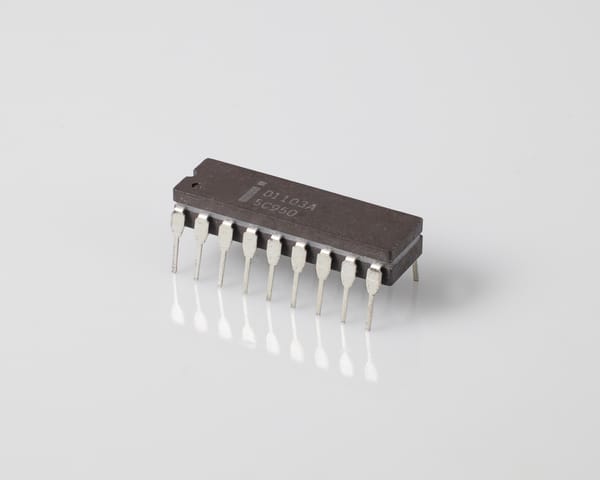
D1103A
Memory gets cheap: 1,024 bits on one chip, priced to compete with magnetic core, the part that made semiconductor main memory a business. OPEN THE RECORD → -
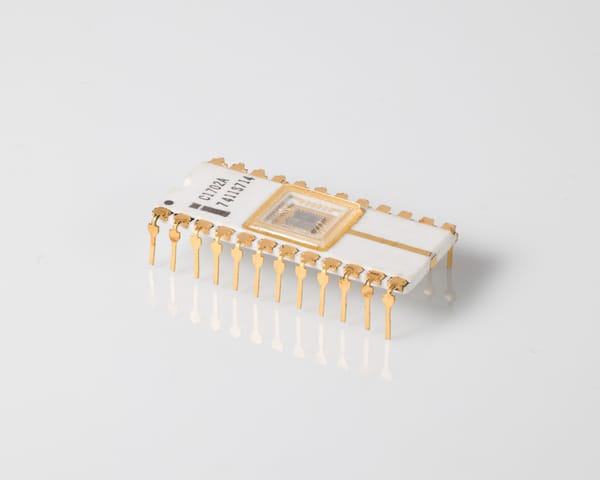
C1702A
Memory that can be rewritten: erased by ultraviolet light through its quartz window, it let engineers change program code without ordering new chips. OPEN THE RECORD → -
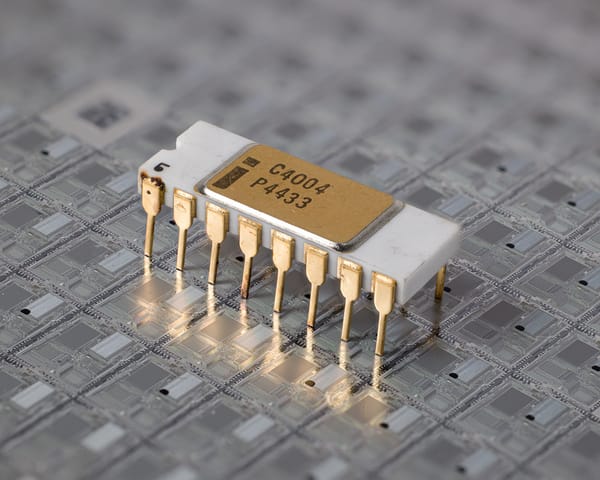
C4004
A calculator chip becomes a processor: designed for Busicom's calculators, the 4004 was the first single-chip central processor offered for sale. OPEN THE RECORD → -
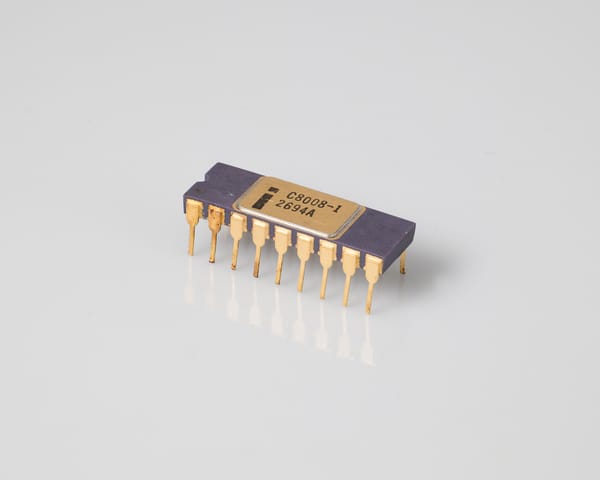
C8008-1
Eight bits: a processor commissioned for a computer terminal and sold to everyone else when the terminal's maker went another way. This -1 part runs at 800 kHz. OPEN THE RECORD → -
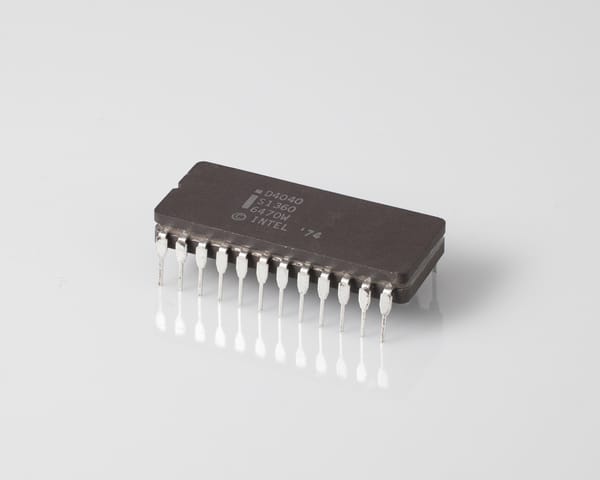
D4040
The four-bit line refined: the 4004's successor added interrupts and more instructions, and this one carries '©INTEL '74' on its top. OPEN THE RECORD →