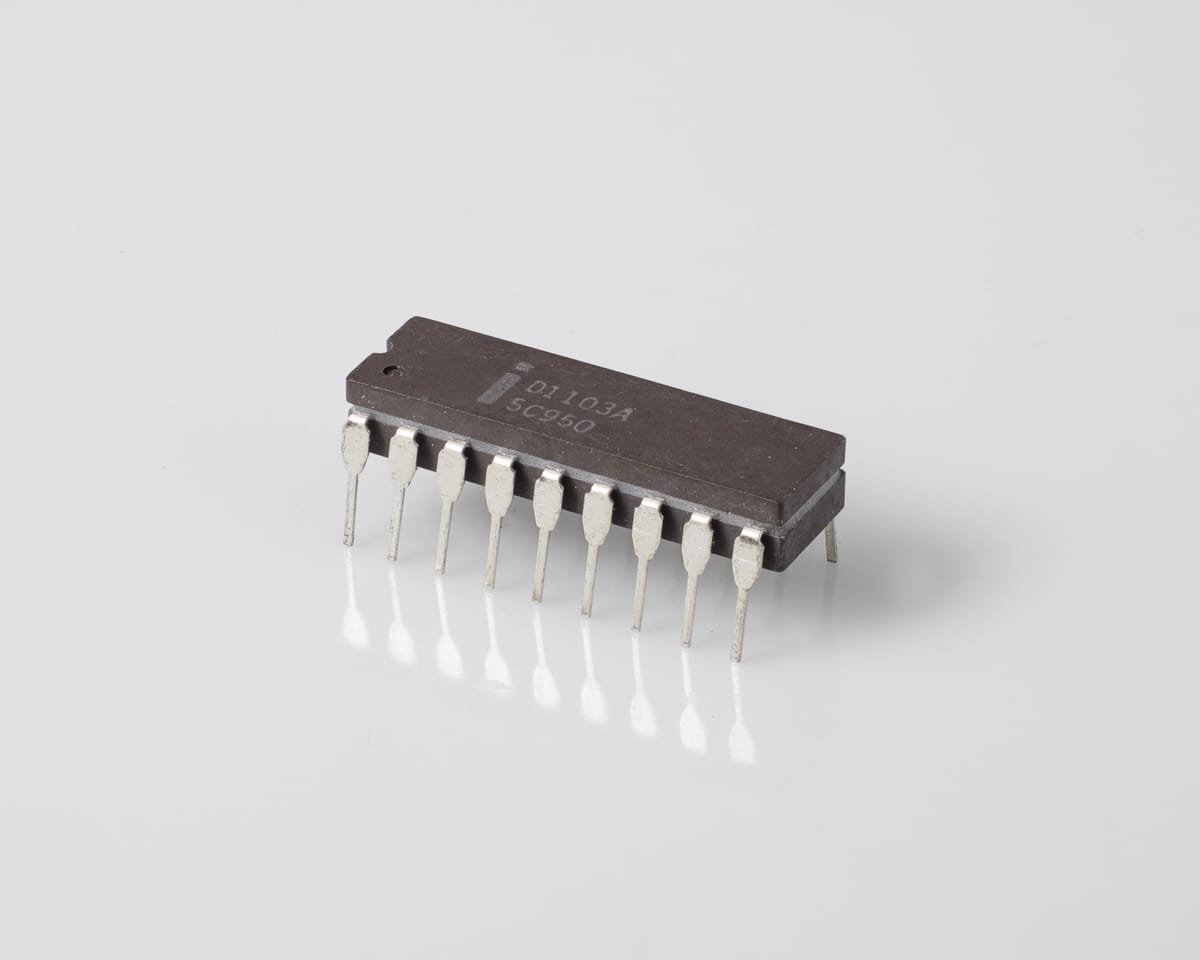
D1103A
02SPECIFICATIONS
- Manufacturer
- Intel
- Category
- Integrated Circuit
- MPN
- D1103A
- Introduced
- 1970
- Storage
- 1 Kbit
- Technology Node
- 20 μm
- Package
- 18-pin Ceramic Dual In-line Package (CDIP)
- Collection
- Intel's First ICs
03SUMMARY
The Intel 1103 (and its later, more reliable version, the 1103A, often appearing as D1103A for ceramic DIP packages) was the world's first commercially available dynamic random-access memory (DRAM) integrated circuit. Introduced in October 1970, the 1103 was a 1024-bit (1K x 1) PMOS (P-channel Metal-Oxide-Semiconductor) memory chip. Its significance stemmed from its small physical size and significantly lower price compared to the dominant magnetic-core memory technology of the time. The 1103 and 1103A played a pivotal role in replacing core memory in many computer applications, making semiconductor memory a viable and cost-effective solution for main memory. While the original 1103 had some initial production yield issues and complex timing requirements, the 1103A, released in 1973, improved upon these, offering simpler timing procedures, higher speed (e.g., 205 ns access time), and TTL compatibility. This chip was a major commercial success for Intel and was instrumental in its early growth and profitability, paving the way for the company's future in memory and microprocessor development.